
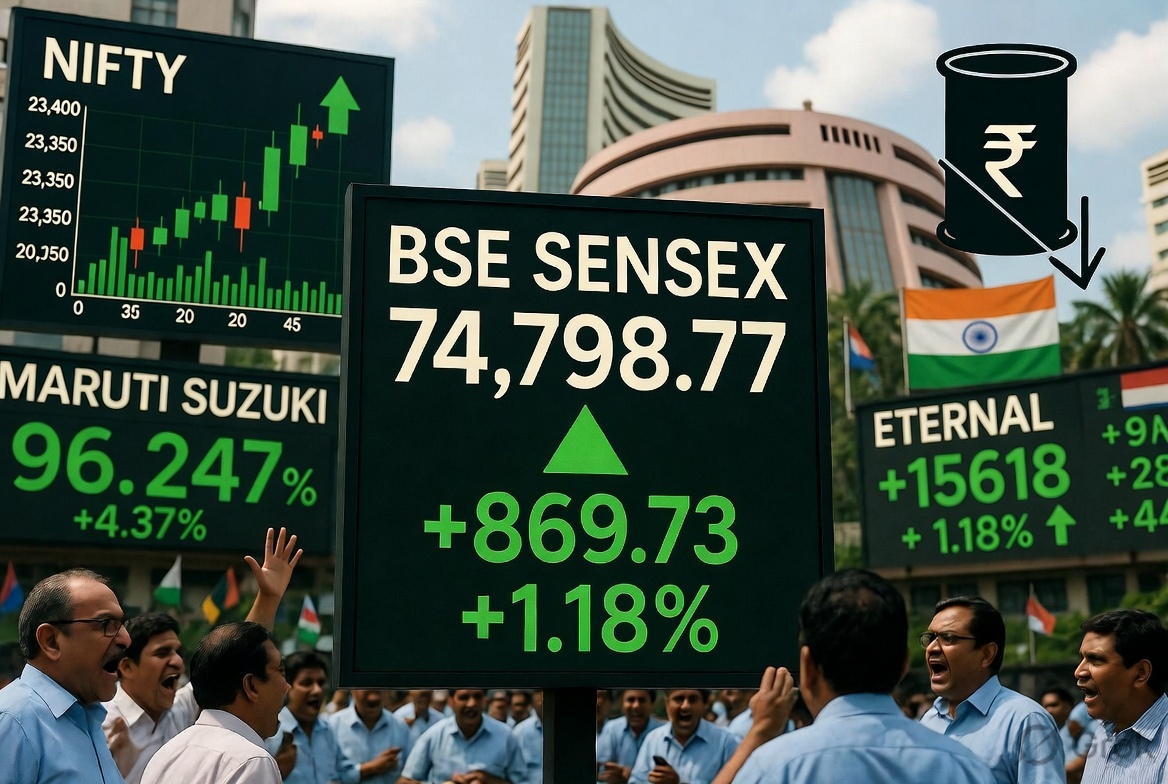
Indian equity benchmarks delivered a strong performance on June 12, 2026, with the BSE Sensex surging approximately 869 points and the NSE Nifty climbing above the 23,350 mark in intra-day trade. This rebound came after a period of volatility influenced by global events, reflecting renewed optimism among investors.
The rally gained momentum early in the session, driven by a significant de-escalation in West Asian tensions. Reports of progress toward a US-Iran peace agreement, with potential signing over the weekend, eased fears of prolonged conflict and supply disruptions. This development prompted a sharp drop in global crude oil prices, with Brent crude sliding below $90 per barrel. For India, a major importer, lower oil costs mean reduced import bills, moderated inflation pressures, and improved trade balances—factors that directly support corporate profitability and economic stability.
Global markets mirrored this positive shift. Overnight gains on Wall Street and strong performances across Asian indices, including a notable surge in South Korea’s KOSPI, created a supportive backdrop. The Indian rupee also strengthened, adding to the favorable environment for foreign inflows and domestic sentiment.
Sector-wise, the auto segment stood out prominently. Maruti Suzuki emerged as a key gainer, benefiting from expectations of healthier consumer demand as fuel prices ease and economic activity picks up. The company’s strong positioning in the passenger vehicle market, combined with potential rural recovery and festive season tailwinds, positioned it well amid the broader upswing. Eternal also featured among the top performers, drawing investor interest likely due to positive company-specific momentum and broader market rotation into select mid and large-cap names.
Broader participation was evident as multiple sectors advanced, including financials, capital goods, and realty. This breadth suggests the move was not limited to a few heavyweights but reflected improving risk appetite across the board. Midcap and smallcap segments also participated, though with varying intensity.
From a longer-term view, such sessions highlight the market’s sensitivity to global macro developments. India’s robust domestic fundamentals—ranging from policy support and digital infrastructure to consumption potential—provide a solid base. However, sustainability will depend on the actual materialization of the Iran deal, upcoming domestic inflation data, and global central bank signals. Investors remain watchful of FII flows, which have been sensitive to geopolitical and yield dynamics in recent weeks.
This rally offers a timely reminder of how interconnected global events shape local opportunities. For participants, it underscores the value of focusing on companies with strong earnings visibility, efficient cost structures, and alignment with structural growth themes like mobility, consumption, and infrastructure. While short-term exuberance can fade, the underlying drivers—lower energy costs and reduced uncertainty—could support a constructive bias if translated into sustained policy and earnings delivery.
"The decisions we make today will shape the world for generations to come."